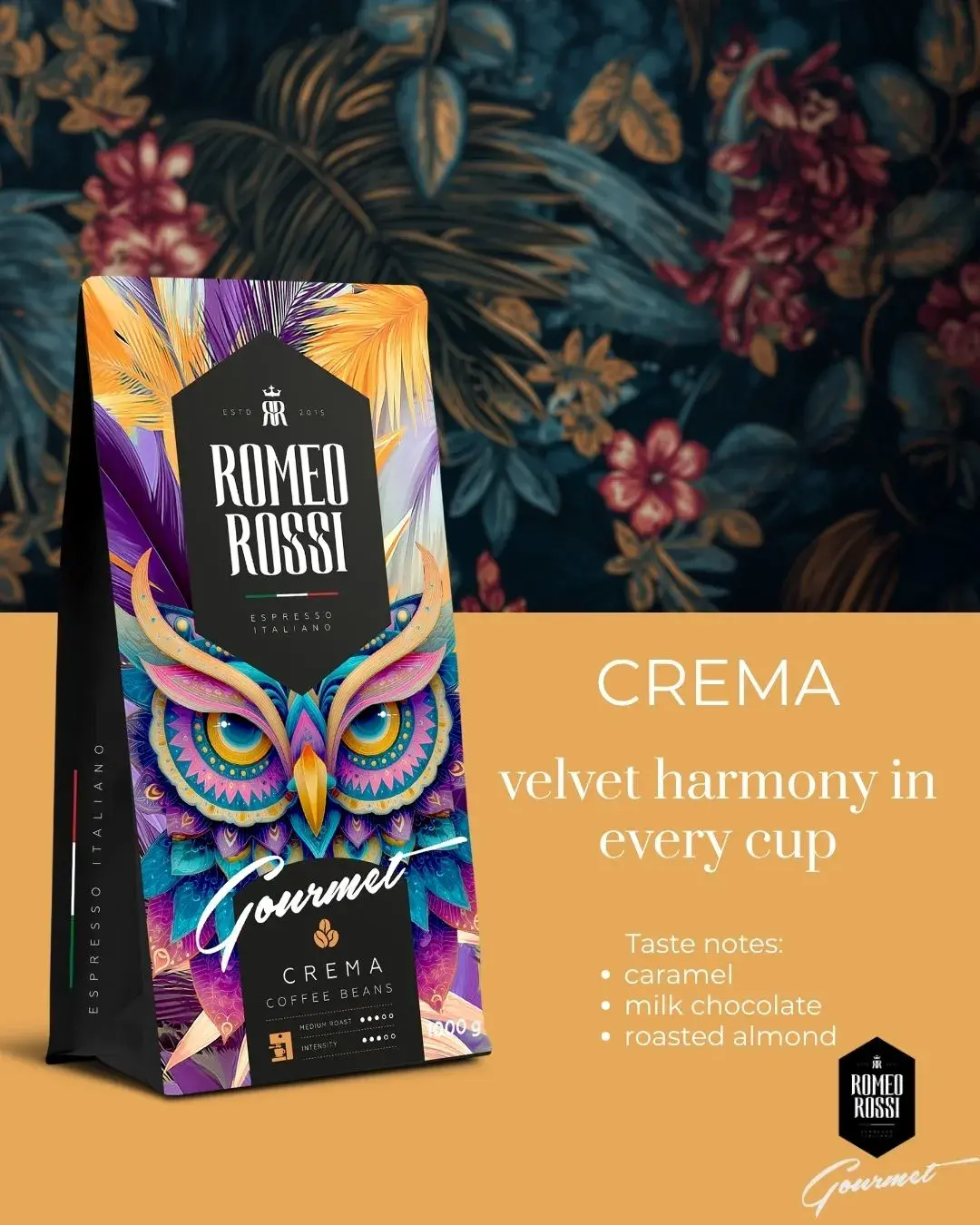
Crema is a classic Italian espresso blend. It's built around a specific goal: a full-bodied, low-acidity espresso with a rich, long-lasting foam, rather than a blend chasing maximum strength or the boldest flavor on the shelf.
The name comes from that goal directly. In Italian espresso tradition, "crema" is the golden-brown foam that forms on top of a well-pulled shot — and this blend is roasted and balanced specifically to produce it consistently, cup after cup.
The Crema Taste Profile
Romeo Rossi Crema is built to a defined profile, not a vague "medium roast" description:
Intensity: 4/5
Flavour: 5/5
Body: 4/5
Sweetness: 4/5
Acidity: 2/5
Here's what that means in the cup. Intensity sits at a confident 4 out of 5 — present and satisfying, but not sharp or overpowering. Flavour is rated at the very top of the scale, giving real depth rather than one-dimensional strength. Body comes in full and rounded at 4/5, the kind of texture that helps a foam layer hold its shape instead of thinning out in seconds. Sweetness is pushed up to 4/5 to balance that body, while acidity is deliberately kept low at 2/5, so nothing sharp cuts across the smoothness — just a clean, mellow, rounded finish from first sip to last.
That combination (full body, high sweetness, low acidity) is exactly what a blend needs to build a stable, persistent crema rather than a foam that collapses before you've finished your first sip.
Why It's Called an Italian Blend
Crema follows the same principle that defines Italian espresso blending more broadly: balance over extremes. Rather than isolating a single high-scoring origin, Italian blends typically combine beans chosen for how they work together — body from one component, sweetness from another, enough natural oils to support a stable foam. Romeo Rossi Crema is roasted following that same approach, calibrated specifically toward the crema effect rather than raw intensity.
What "Crema" Actually Means on an Espresso
If you've watched a shot of espresso pour and noticed a thin, golden-brown layer settle on top, that's crema — and it's not an additive or a trick. It's a natural result of brewing coffee under pressure. As hot water is forced through finely ground, freshly roasted coffee, it dissolves carbon dioxide trapped inside the beans from roasting. When that pressurized water hits the cup and the pressure drops, the gas escapes as tiny bubbles, pulling oils, sugars, and melanoidins along with it — the compounds that give crema its color and slightly sweet aroma.
Because it depends on pressure, crema is essentially exclusive to espresso. Drip coffee, pour-over, and French press don't generate enough pressure to produce it.
Does Thick Crema Mean Better Coffee?
Not on its own. Crema is a useful signal, but not a scorecard. A thick, dark crema can simply mean a robusta-heavy blend or a darker roast, not necessarily higher quality — and a lighter, more delicate crema doesn't automatically mean a worse espresso.
What crema reliably indicates is freshness: coffee loses carbon dioxide over time, so beans roasted weeks or months ago will produce a noticeably thinner crema than freshly roasted ones. That's part of why freshness matters as much as the blend itself — even a well-designed profile like Crema's needs beans that haven't sat too long since roasting.
Getting the Best Out of a Crema Blend at Home
A few things decide whether a Crema-style blend performs the way it's designed to at home:
A simple check: tilt the cup slightly. A properly extracted crema should stretch to cover the surface again once you set it back down, without tearing, and hold for at least a minute or two.
Frequently Asked Questions About Crema
What is the Romeo Rossi Crema blend? Romeo Rossi Crema is an Italian espresso blend roasted in Bovolone, Verona, designed for a full-bodied, low-acidity cup with a rich, long-lasting golden-brown foam.
What is the taste profile of Romeo Rossi Crema? It's rated 4/5 for intensity, 5/5 for flavour, 4/5 for body, 4/5 for sweetness, and 2/5 for acidity — a rounded, sweet, low-acidity blend built to hold a stable crema.
What makes Romeo Rossi Crema different from Romeo Rossi Intenso? Crema is built for a rounded, velvety espresso with a stable, long-lasting foam and low acidity, while Intenso leans into a bolder, more intense flavor profile. Both are roasted in Bovolone, Verona, but suited to different preferences.
Why is it called "Crema"? The name refers to the golden-brown foam that forms on top of a well-pulled espresso. This blend is specifically balanced — in body, sweetness, and acidity — to produce that foam consistently.
What is crema on an espresso? Crema is the thin, golden-brown foam that forms on top of espresso, made from carbon dioxide, oils, sugars, and melanoidins released during brewing under pressure.
Why does only espresso have crema? Crema requires high pressure to trap and release carbon dioxide from the coffee grounds. Brewing methods like drip, pour-over, or French press don't use enough pressure to produce it.
Does thick crema mean better quality coffee? Not necessarily. Crema thickness is influenced by bean type, roast level, and processing — it's a stronger sign of freshness than of overall quality.
How long should crema last on an espresso? A well-extracted crema should hold for at least one to two minutes and reform when the cup is gently tilted, rather than breaking apart immediately.
Ciao da Verona!
The name comes from that goal directly. In Italian espresso tradition, "crema" is the golden-brown foam that forms on top of a well-pulled shot — and this blend is roasted and balanced specifically to produce it consistently, cup after cup.
The Crema Taste Profile
Romeo Rossi Crema is built to a defined profile, not a vague "medium roast" description:
Intensity: 4/5
Flavour: 5/5
Body: 4/5
Sweetness: 4/5
Acidity: 2/5
Here's what that means in the cup. Intensity sits at a confident 4 out of 5 — present and satisfying, but not sharp or overpowering. Flavour is rated at the very top of the scale, giving real depth rather than one-dimensional strength. Body comes in full and rounded at 4/5, the kind of texture that helps a foam layer hold its shape instead of thinning out in seconds. Sweetness is pushed up to 4/5 to balance that body, while acidity is deliberately kept low at 2/5, so nothing sharp cuts across the smoothness — just a clean, mellow, rounded finish from first sip to last.
That combination (full body, high sweetness, low acidity) is exactly what a blend needs to build a stable, persistent crema rather than a foam that collapses before you've finished your first sip.
Why It's Called an Italian Blend
Crema follows the same principle that defines Italian espresso blending more broadly: balance over extremes. Rather than isolating a single high-scoring origin, Italian blends typically combine beans chosen for how they work together — body from one component, sweetness from another, enough natural oils to support a stable foam. Romeo Rossi Crema is roasted following that same approach, calibrated specifically toward the crema effect rather than raw intensity.
What "Crema" Actually Means on an Espresso
If you've watched a shot of espresso pour and noticed a thin, golden-brown layer settle on top, that's crema — and it's not an additive or a trick. It's a natural result of brewing coffee under pressure. As hot water is forced through finely ground, freshly roasted coffee, it dissolves carbon dioxide trapped inside the beans from roasting. When that pressurized water hits the cup and the pressure drops, the gas escapes as tiny bubbles, pulling oils, sugars, and melanoidins along with it — the compounds that give crema its color and slightly sweet aroma.
Because it depends on pressure, crema is essentially exclusive to espresso. Drip coffee, pour-over, and French press don't generate enough pressure to produce it.
Does Thick Crema Mean Better Coffee?
Not on its own. Crema is a useful signal, but not a scorecard. A thick, dark crema can simply mean a robusta-heavy blend or a darker roast, not necessarily higher quality — and a lighter, more delicate crema doesn't automatically mean a worse espresso.
What crema reliably indicates is freshness: coffee loses carbon dioxide over time, so beans roasted weeks or months ago will produce a noticeably thinner crema than freshly roasted ones. That's part of why freshness matters as much as the blend itself — even a well-designed profile like Crema's needs beans that haven't sat too long since roasting.
Getting the Best Out of a Crema Blend at Home
A few things decide whether a Crema-style blend performs the way it's designed to at home:
- Roast freshness — beans roasted within the last two to four weeks hold more CO₂ and build noticeably better foam.
- Grind size — too coarse and water rushes through, leaving a pale, short-lived layer; too fine and extraction goes too far, giving a dark, bitter result.
- Water temperature and pressure — most home machines need water around 90–95°C and at least 9 bars of pressure to extract the oils properly.
A simple check: tilt the cup slightly. A properly extracted crema should stretch to cover the surface again once you set it back down, without tearing, and hold for at least a minute or two.
Frequently Asked Questions About Crema
What is the Romeo Rossi Crema blend? Romeo Rossi Crema is an Italian espresso blend roasted in Bovolone, Verona, designed for a full-bodied, low-acidity cup with a rich, long-lasting golden-brown foam.
What is the taste profile of Romeo Rossi Crema? It's rated 4/5 for intensity, 5/5 for flavour, 4/5 for body, 4/5 for sweetness, and 2/5 for acidity — a rounded, sweet, low-acidity blend built to hold a stable crema.
What makes Romeo Rossi Crema different from Romeo Rossi Intenso? Crema is built for a rounded, velvety espresso with a stable, long-lasting foam and low acidity, while Intenso leans into a bolder, more intense flavor profile. Both are roasted in Bovolone, Verona, but suited to different preferences.
Why is it called "Crema"? The name refers to the golden-brown foam that forms on top of a well-pulled espresso. This blend is specifically balanced — in body, sweetness, and acidity — to produce that foam consistently.
What is crema on an espresso? Crema is the thin, golden-brown foam that forms on top of espresso, made from carbon dioxide, oils, sugars, and melanoidins released during brewing under pressure.
Why does only espresso have crema? Crema requires high pressure to trap and release carbon dioxide from the coffee grounds. Brewing methods like drip, pour-over, or French press don't use enough pressure to produce it.
Does thick crema mean better quality coffee? Not necessarily. Crema thickness is influenced by bean type, roast level, and processing — it's a stronger sign of freshness than of overall quality.
How long should crema last on an espresso? A well-extracted crema should hold for at least one to two minutes and reform when the cup is gently tilted, rather than breaking apart immediately.
Ciao da Verona!